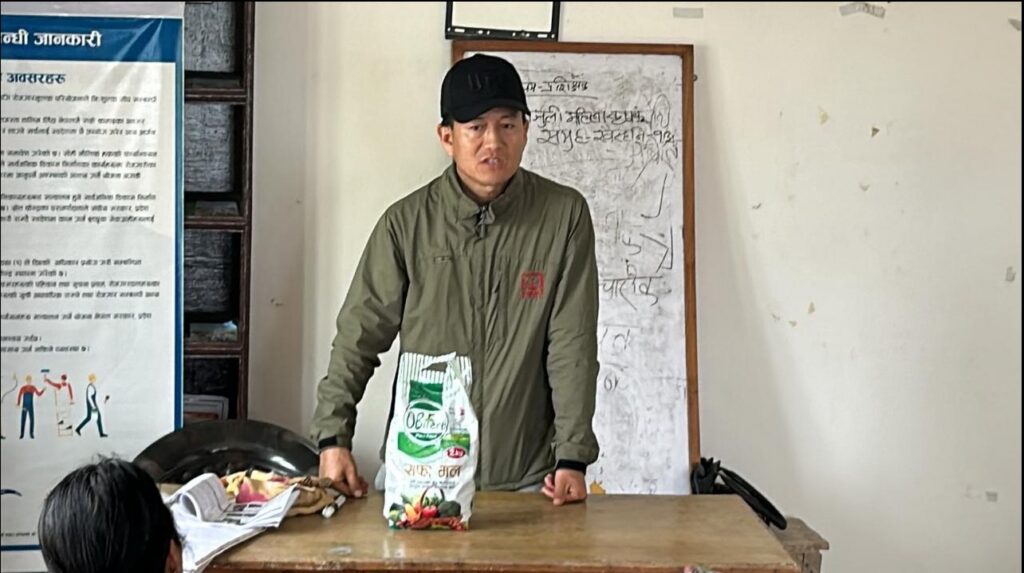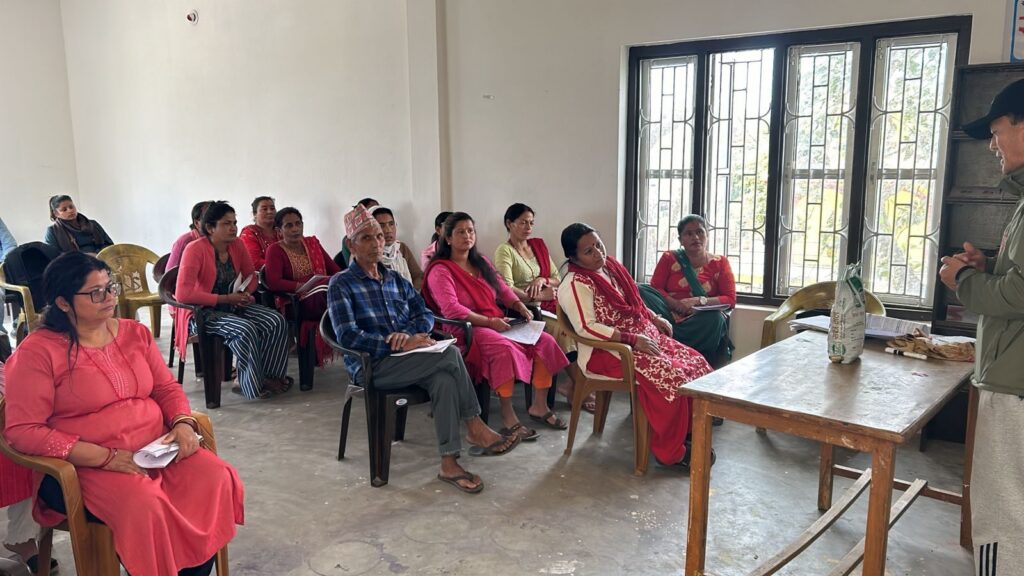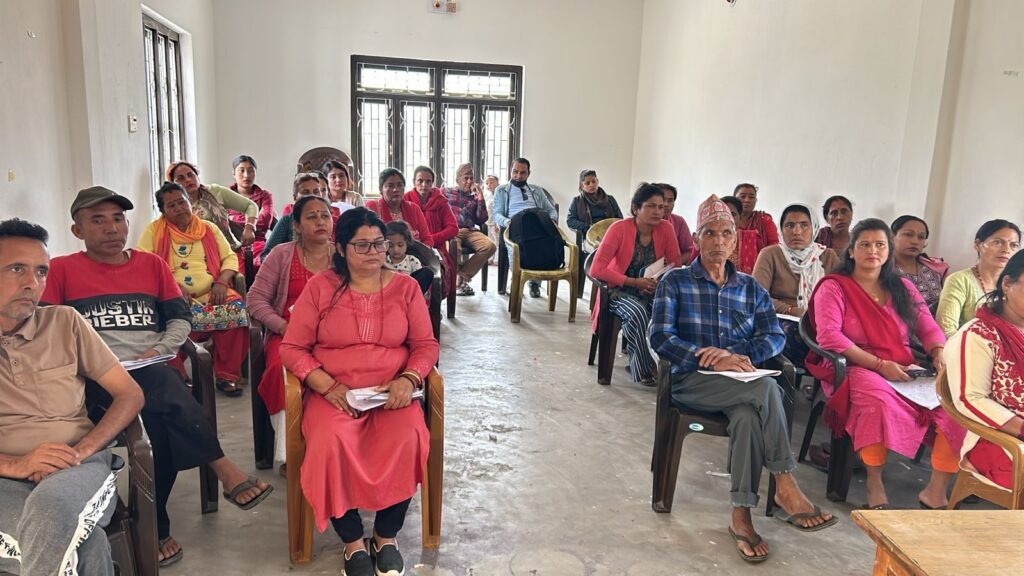
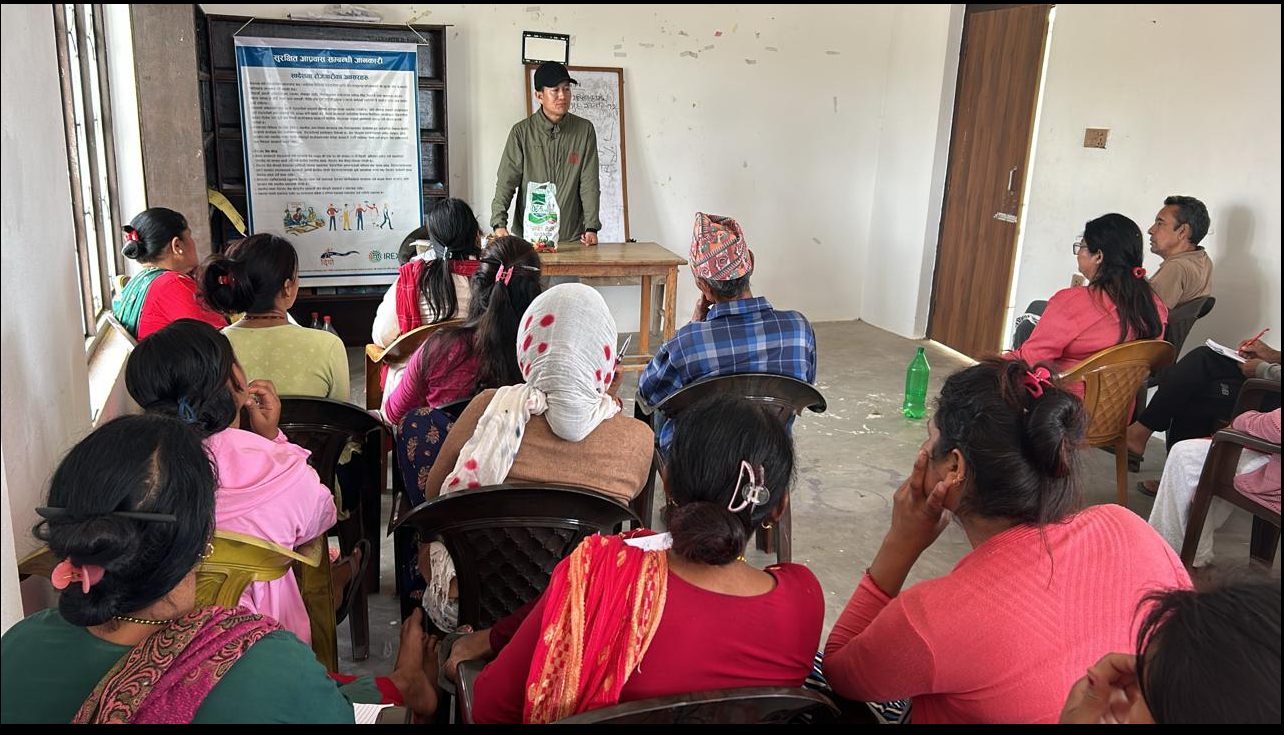
On Saturday, 23 March 2024 (2080/12/10 BS), Safa Urja led a one-day training for the members of an Integrated Pest Management (IPM) farmer field school. The session was part of the school’s sixth week of training and was chaired by the programme coordinator. The attendance register lists 25 participants, including the group’s office bearers, two farmer facilitators and its members, most of them women farmers.
What we covered
- How Safa Mal organic fertiliser is made from separated organic waste such as vegetable and fruit waste and green waste
- Why soil needs organic matter, and what happens to soil that relies on chemical fertiliser alone
- When and how to apply organic fertiliser, following the guidance on the pack for each crop
- How organic fertiliser supports IPM: healthy soil grows stronger plants that cope better with pests
- Questions from farmers about their own fields and crops
Why organic fertiliser matters for the environment
- Healthier soil — organic matter improves soil structure, helps it hold water and nutrients, and feeds earthworms and soil life.
- Cleaner water — relying less on chemical fertiliser means less excess nutrient washing into rivers, ponds and groundwater.
- Less waste, fewer emissions — organic waste that is composted instead of dumped does not rot in the open and release methane.
- Closing the loop — waste from homes and markets goes back to the farm as food for the soil. This is the circular economy at work.
- Better for farmers over time — living, healthy soil can reduce how much farmers need to spend on chemical inputs.
We thank the coordinator, the farmer facilitators and every member who took part. Farmer groups, cooperatives and field schools who would like a similar session can contact us.